Older or Elder - What is the difference?
Differences between olders and elders

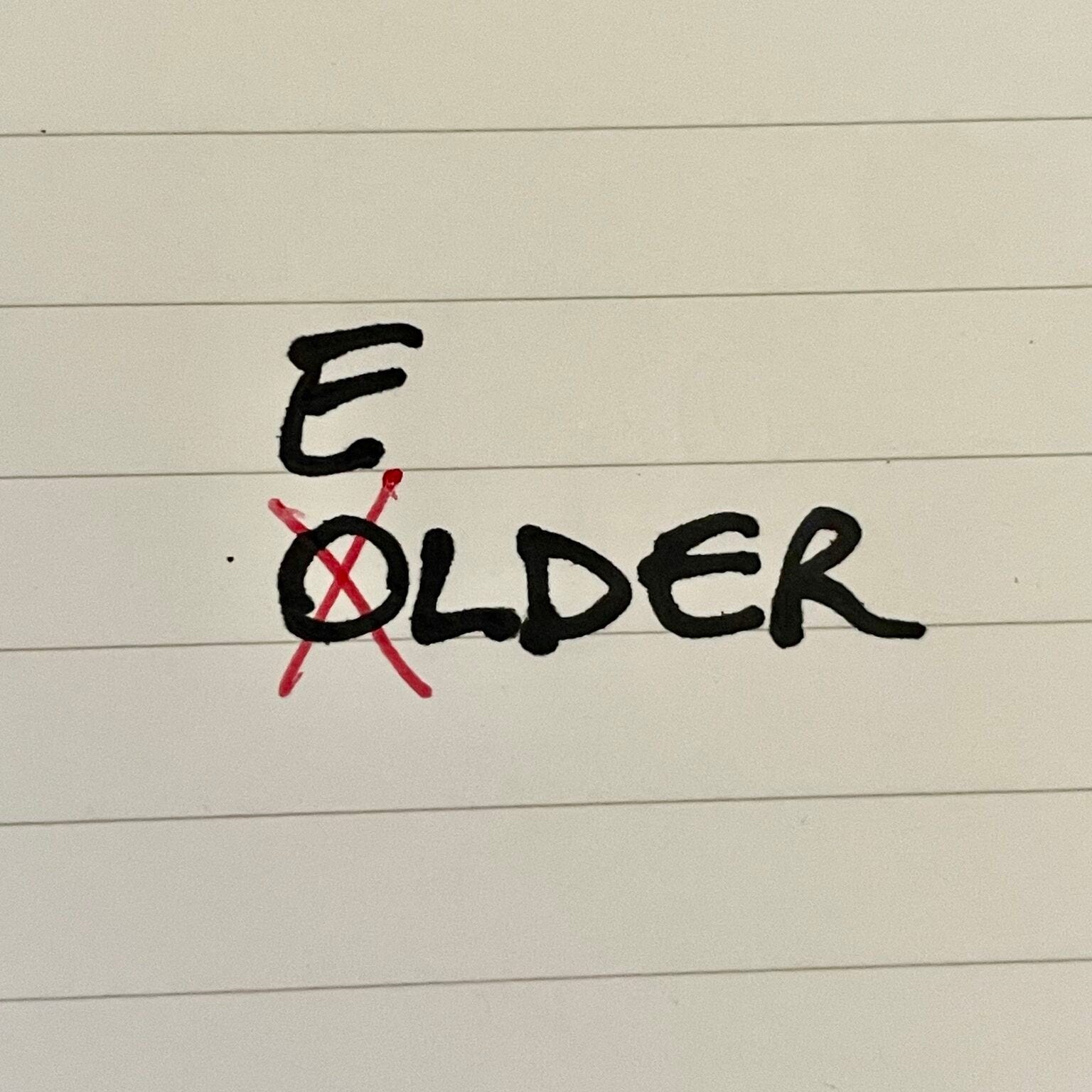
We need to move beyond thinking of ‘elders’ in terms of age. There are 35-year-olds with more emotional and spiritual maturity than 70-year-olds. It's good to know the difference between ‘elders’ and ‘olders’.
Becoming an ‘older’ is a default passive event. Stay alive long enough and you’ll gain the status of being an ‘older’. But, becoming ‘elder’ requires intentional heartfelt practise; maturity; inner work; ownership.
For the first time in history, more people are living longer than ever. (You can thank modern medicine, sanitation, and healthcare for that.) Today we have a mass of ‘olders’ who never matured beyond early adulthood or late adolescence - and this is tragic. But hey, how could they grow up? Their own role models were destroyed and wounded by wars, progress, and institutions. As a 70-something asked me recently, ‘How were we supposed to learn to be elders without any elders around?’. He'd lost his dad, grandad and uncles to wars and PTSD.
He was right. We cannot blame olders for not knowing any better. We cannot blame them for the traumatic stuckness they've experienced. We also don't want it replicated for the generations to come, do we? This is why we must see the older/elder difference - so we can adapt, address the issues and change.
Here are a couple of differences between olders and elders:
Olders want to remain centre-stage heroes.
Elders are happy to be invisible companions.
Olders suffer from ‘center-stage syndrome’. They feel a persistent need to remain the ‘hero’ or ‘star’ of every story. Olders may even complain that ‘no one listens to their seniors anymore.' This is an innocent lament and points to two things. First, we now live in a society that values the voice of sibblings over parents. Second, some olders never grow past their deep longing to remain important heroes.
Elders, on the other hand, adopt a de-centered posture. True elders give up the role of hero at midlife so they can become ‘guides-on-the-side’ to younger heroes. Elders also give up their need to always be heard. They prefer to be companions who walk alongside others with compassionate curiosity. They also develop exceptional listening skills. As a result, their words mean more.
Olders dispense knowledge.
Elders hold wisdom.
Olders often act as a ‘center-stage distributor of things they know.' Olders treat their knowledge like a fix-all, regardless of relevance. Unhelpful and unsolicited facts spill from their mouths.
An elder is a wisdom-holder. Elders decenter their own need to have answers for every question. They are comfortable with silence and know how to be a non-anxious presence. Elders inhabit something called ‘psychological spaciousness’. This means they can hold complexity, uncertainty, and paradoxes in themselves and for others.
--
If you want to learn more about the art of eldering in an age of immaturity, get my book Decenter Everything (2025). Read it. Wrestle with it.